


Relays read configuration from the environment at startup: where the Arduino lives, how long to cache JSON, which Redis DB index to use, and how verbose logging should be. Hard-coding LAN IPs in source leads to git leaks and rebuilds for trivial changes: environment variables align with Docker deployment and production hygiene.
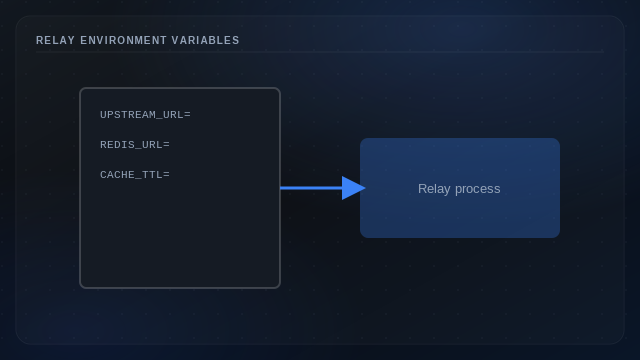
Common variables
        UPSTREAM_URL=http://192.168.1.50/
REDIS_URL=redis://redis:6379/0
CACHE_TTL_SECONDS=60
LOG_LEVEL=info
Secrets handling
Optional API keys for public relay auth belong in env, not committed files. Mirror patterns from Cloudflare secrets on the Astro side. Never store database credentials in the relay: it only needs to serve JSON, or push readings through the device ingest API.
Validation on boot
Fail fast when UPSTREAM_URL is missing; log resolved values once at INFO. Pair with health checks so orchestrators restart unhealthy containers instead of serving blank JSON.